Enhance Your Smile with Trusted Dental Care
Oral Cancer Screening in Lindenhurst, IL at Every Routine Checkup
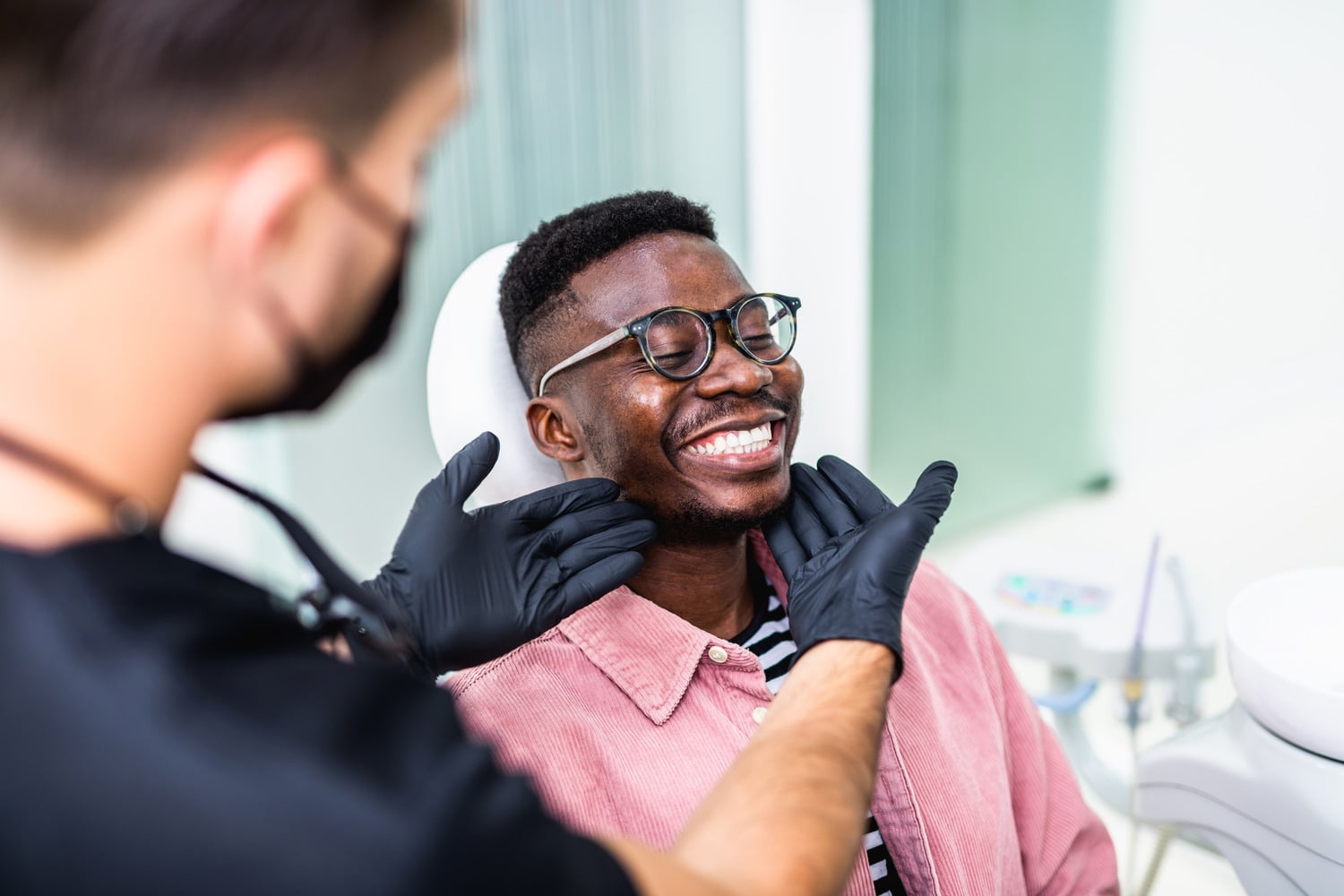
If you found this page after searching for an oral cancer screening near me, you may have noticed a spot in your mouth that won’t go away, or someone may have told you that dentists check for cancer during cleanings. Either way, you’re in the right place. Families visit our office in Lindenhurst, IL for everything from a child’s first cleaning to a chipped molar, and every routine checkup at Clarity Dental Group includes a careful look for signs of cancer in the mouth and throat. There is nothing extra to schedule and nothing to prepare.
The screening itself is a visual and hands-on exam that usually takes a few minutes. Your dentist looks at and gently feels the soft tissue your toothbrush never reaches: the lips, the inside of the cheeks, the gums, the sides and underside of the tongue, the floor and roof of the mouth, and the back of the throat. Outside the mouth, we feel along the jaw and neck for lumps or swollen lymph nodes. We’re looking for white or red patches, sores that haven’t healed, rough spots, and thickened tissue. Most of what turns up is harmless, like a cheek bite or a canker sore.
Oral cancer rarely hurts in its early stages, which is exactly why a routine check matters. You can feel completely fine and still have a small patch worth watching. Because the screening is already part of your checkup, you never have to decide whether to pay for an add-on or squeeze in another appointment. If you’re nervous, it helps to know there are no needles and no drilling involved, just a light, a mirror, and a square of gauze to hold your tongue to one side. And if we do spot something, you’ll get a plain explanation and a clear next step, often a simple recheck in two weeks, rather than a vague warning that leaves you worrying.
What Is an Oral Cancer Screening?
An oral cancer screening is a short exam that checks your mouth, throat, and neck for early signs of cancer or precancerous changes. It’s a routine check on healthy-looking tissue, much like a skin check that looks for moles that have changed. Oral cancer covers cancers of the lips, tongue, cheeks, gums, floor and roof of the mouth, and the part of the throat just behind the mouth. At our practice, it happens during every preventive dental exam, whether or not you ask for it.
What Does the Dentist Check During an Oral Cancer Exam?
During an oral cancer exam, your dentist checks every soft surface inside your mouth plus the outside of your jaw and neck. A thorough check covers:
- Your lips and the corners of your mouth, for changes in color or texture
- The inside of your cheeks and lips, gently pulled aside for a clear view
- Your gums and the folds where your cheeks meet your gums
- Your tongue, especially the sides and underside, where oral cancer often starts
- The floor and roof of your mouth and the back of your throat
- Your neck and jaw, felt by hand for lumps or tender lymph nodes
That last step is often called a head and neck exam, and it catches swelling you can’t see from inside the mouth.
Is an Oral Cancer Screening Painful, and How Long Does It Take?
No, the screening isn’t painful, and it usually takes only a few minutes. You may feel light pressure along your jaw and under your chin, and holding your tongue out with gauze feels a little odd, but nothing should hurt. If you gag easily, tell us before we look toward the back of the throat. We can slow down, take breaks, or change how we hold your tongue. Kids and teens are checked the same gentle way, and we explain each step as we go.
How Often Should You Be Screened for Oral Cancer?
For most patients, a screening at each routine checkup is the right rhythm, which usually means twice a year. People with a higher risk, such as tobacco users or anyone with a past oral cancer diagnosis, benefit most from staying consistent, because comparing one visit to the next is how small changes get noticed. Our approach to preventive care is built so this check happens automatically. Between visits, don’t wait for your next cleaning if something new appears and sticks around.
Who Is at Higher Risk for Oral Cancer?
Anyone can develop oral cancer, but some habits and health factors raise the odds. The most common oral cancer risk factors include:
- Tobacco in any form, including cigarettes, cigars, pipes, and chewing tobacco
- Heavy alcohol use, especially combined with tobacco, which raises the risk more than either alone
- Infection with certain types of human papillomavirus (HPV)
- Years of sun exposure on unprotected lips
- Age, since most cases are found in people over 40
Having a risk factor doesn’t mean you’ll get cancer, and having none doesn’t make you immune. It tells us where to pay closer attention, so please be honest on your health history form.
Can Nonsmokers Get Oral Cancer?
Yes. Nonsmokers can and do get oral cancer, and certain strains of HPV are now a well-known cause. HPV-related oral cancer tends to develop toward the back of the throat, around the base of the tongue and the tonsils, often in adults who have never used tobacco. Part of that area can’t be seen during a dental exam, so a lasting sore throat or one swollen lymph node deserves attention even when your mouth looks normal. If you have symptoms like these, we may recommend that a specialist examine your throat. The HPV vaccine also lowers risk, so it’s worth asking your physician about it.
What Are the Early Warning Signs of Mouth Cancer?
The early signs of oral cancer are often small and painless. See a dentist or physician if any of these lasts longer than two weeks:
- A sore or ulcer that doesn’t heal
- A white or red patch on the gums, tongue, cheeks, or tonsils
- A lump, rough spot, or thickened area in the mouth or on the lip
- Numbness or pain in the mouth without an obvious cause
- Hoarseness, or the feeling that something is caught in your throat
- Trouble chewing or swallowing, or a denture that suddenly fits poorly
The two-week mark appears in federal guidance on oral cancer symptoms and risk factors because ordinary irritations usually heal by then.
What Happens if the Dentist Finds Something Unusual?
If we notice something unusual, the most common next step is to recheck the area in about two weeks rather than jump straight to a biopsy. Many spots come from a sharp tooth, a cheek bite, or a burn from hot food, and they fade once the cause is gone. We’ll show you where the area is, describe what we see, and note it in your chart for comparison. If the spot is still there at the recheck, or looks concerning from the start, we’ll refer you to an oral surgeon or other specialist for a biopsy, which is the only way to confirm or rule out cancer.
How Much Does an Oral Cancer Screening Cost?
There’s no separate charge at our office, because the screening is included in every routine checkup. Many insurance plans cover routine exams as preventive care, so the mouth cancer screening usually adds nothing to what you already expect to pay. If you don’t have insurance, ask about our dental membership plan, and our front desk can walk you through what a checkup costs before you book. If a biopsy is ever needed, the specialist who performs it bills for it separately, and we’ll tell you that ahead of time.
How Can You Check Your Own Mouth Between Visits?
A quick monthly self-check in a well-lit mirror helps you spot changes between dental visits. It takes about two minutes:
- Pull your lips away from your teeth and look at the inside of each lip and your gums
- Pull each cheek out and check its inner surface for patches or sores
- Stick out your tongue, check the top and each side, then lift it to see underneath
- Tilt your head back and look at the roof of your mouth
- Feel along both sides of your neck and under your jaw for lumps
You’re learning what normal looks like for you, so a new patch stands out. If one lasts two weeks, call us instead of waiting.
Why Choose Clarity Dental Group for Oral Cancer Screening
Patients choose our practice because the screening comes with straight answers. Dr. Peter Chung built his approach around conservative, honest care, and that shapes how we handle findings. We tell you what we see and whether it needs watching or action. A few specifics set the visit apart:
- The screening is part of every routine checkup, with no add-on fee
- Anything we find comes with a clear plan, whether that’s a recheck or a referral
- Digital and panoramic X-rays round out the rest of your exam
- We see patients of every age, so the whole family can share one dental home
You can also browse the full range of dental services for every age we provide.
Get Screened at Your Next Checkup with Clarity Dental Group
Whether you’ve noticed a spot that won’t heal or simply want the peace of mind of a careful look, the next step is the same: book your checkup. Clarity Dental Group sees patients Monday through Thursday from 9:00 a.m. to 5:00 p.m., and every visit includes an oral cancer screening in Lindenhurst, IL at no added cost. If something concerns you right now, don’t wait for a routine visit. Request an appointment and we’ll find a time to take a look.